

Planning guide · South West France
Planning a wedding weekend in South West France.
When your guests travel from abroad for your wedding, one day goes by far too fast. That’s why many international couples don’t just plan a wedding day. They plan a weekend: a welcome evening, the wedding itself, and a slow morning after. Here’s how to shape it, and a few ideas to make your guests fall in love with the region. For inspiration, see Evie and Harry’s château wedding and Elaina and Georges’s wedding at Domaine les Gaillardoux.
Friday: the welcome evening
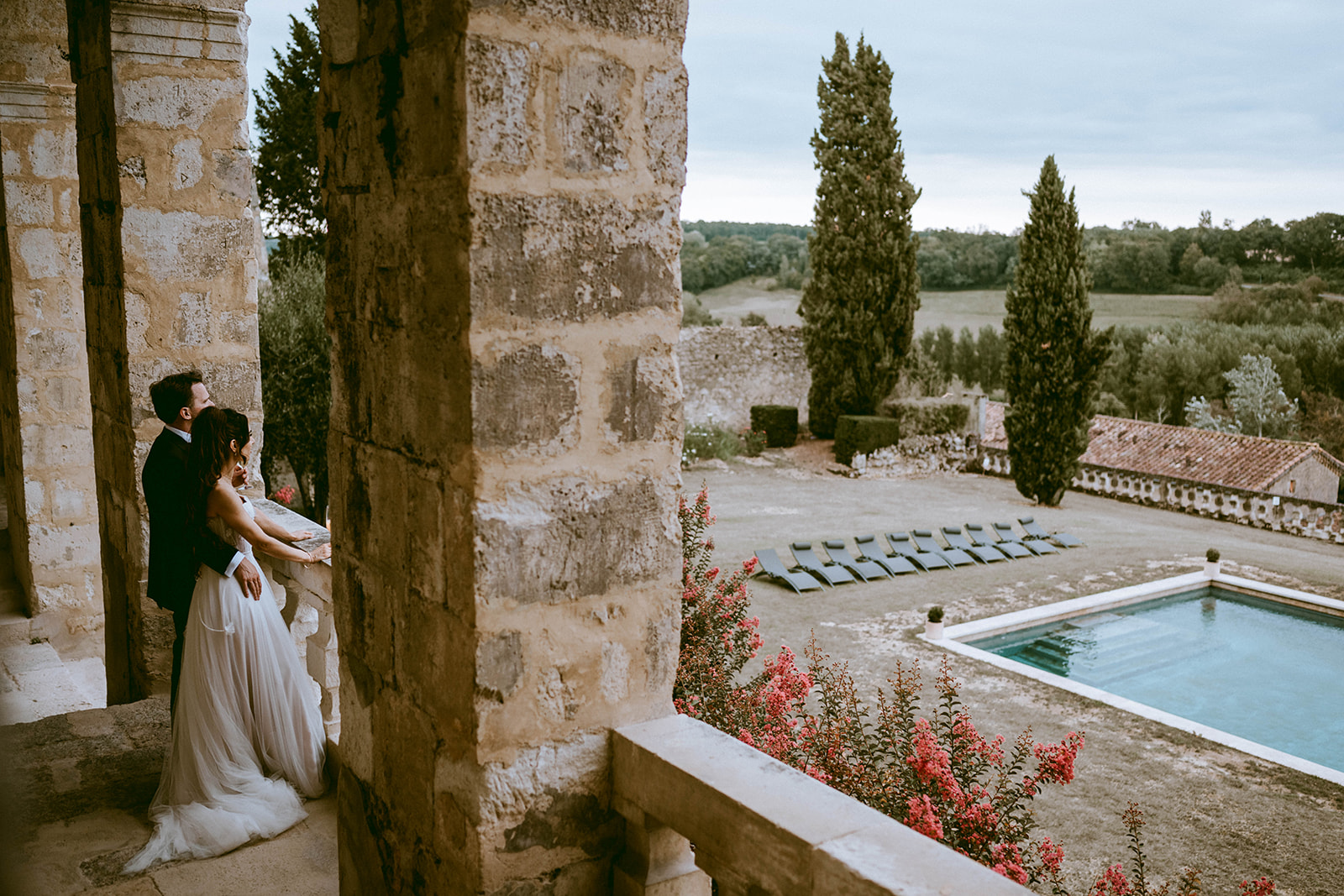
In general, couples get the keys to the venue on the Thursday or the Friday. With a bigger budget, a wedding planner prepares everything for you, including a welcome dinner with the caterer.
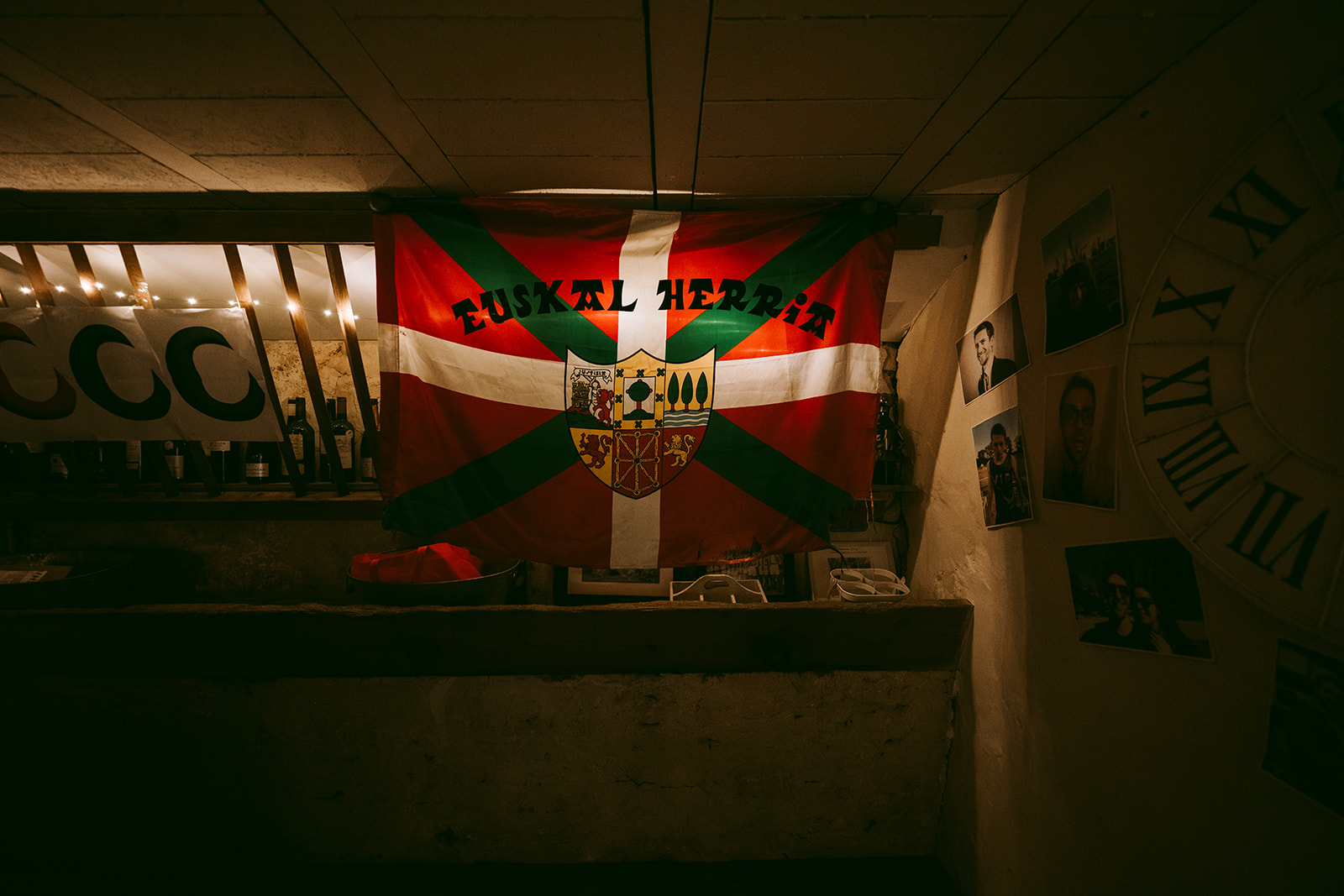
A relaxed dinner or drinks on the evening before the wedding is the best gift you can give your guests. Families meet, friends from different parts of your life get to know each other, and by the time the ceremony starts, everyone already feels part of the same group. It doesn’t need to be formal: a long table in a courtyard, local wine, food from the region, a few string lights.
For you, it’s also a chance to see everyone calmly, before the rush of the big day.
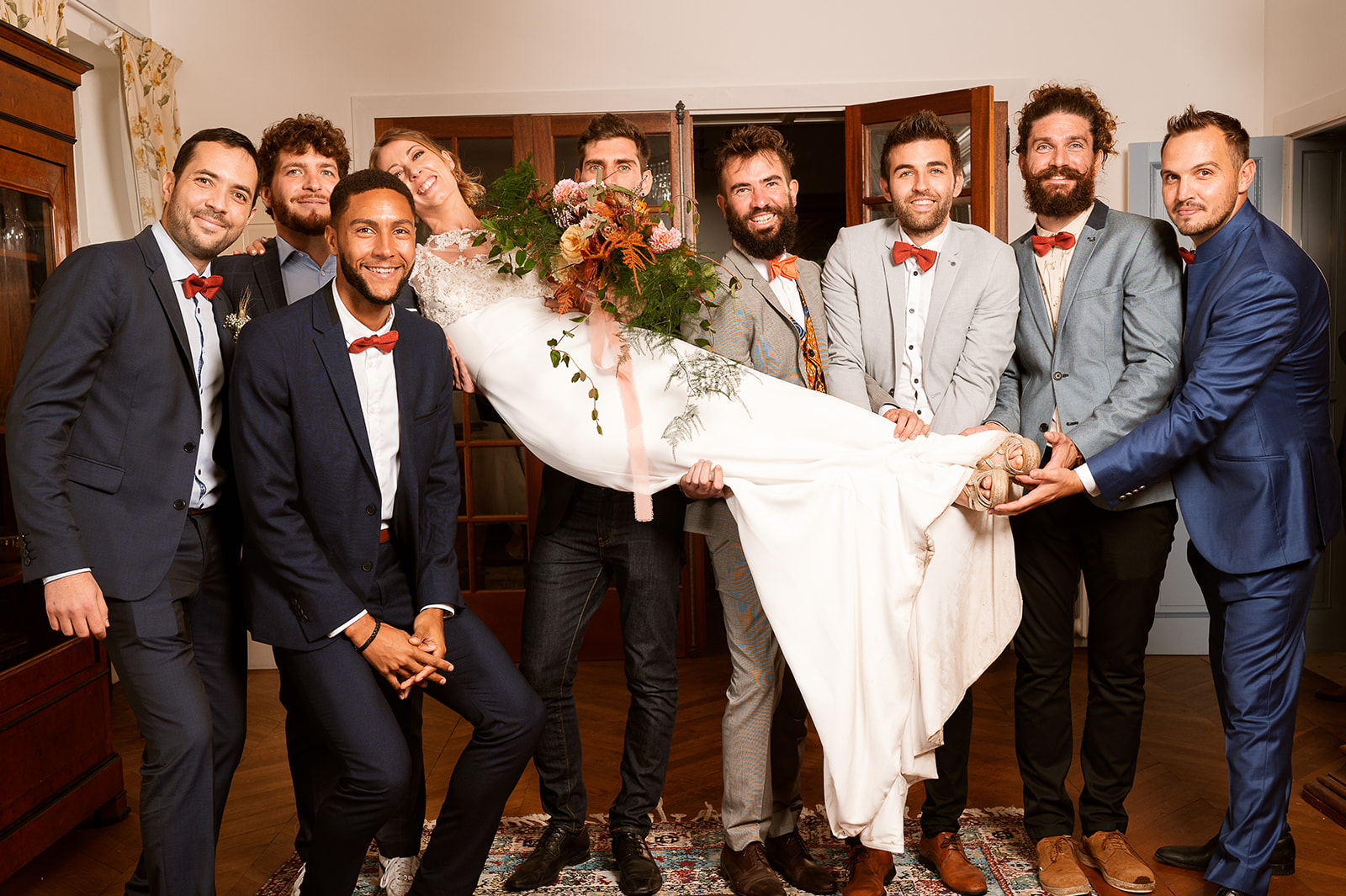
For me too. If your photographer can be there, it’s a lovely time for photos: the first reunions with the people closest to you. They’re happy to see each other, they’ve just made the journey, they catch up quickly because it’s been so long. And spreading the wedding over several days simply lets you enjoy your people more.
For me, the welcome dinner is really important. It puts everyone at ease. By Saturday, I’m not a stranger anymore, I’m not just “the photographer”: we’ve chatted a little, your guests already know me, and the photos are more natural. I also learn who’s who: who the parents are, how the families fit together, sometimes that someone dear is no longer with us. It sounds silly, but it means I won’t make a clumsy mistake on the big day.

Saturday: the wedding day
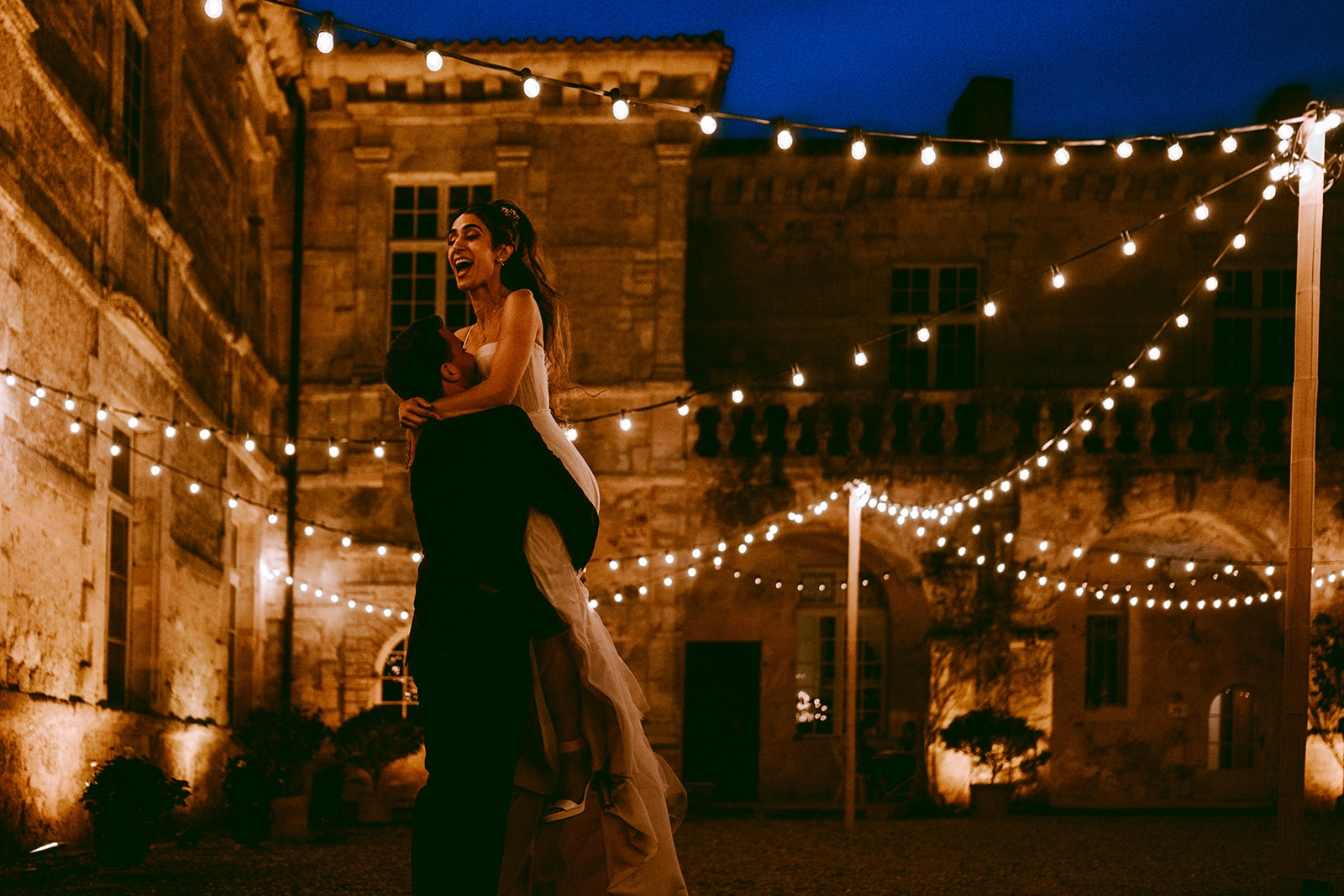
If you’re having a French civil wedding, see whether you can do the town hall on the Friday, so the big day is less rushed. That’s what we did for my own wedding in 2008: the civil wedding on the Friday, the church wedding on the Saturday, and the retour de noces on the Sunday, nice and slow. Three days, and we really enjoyed them. Honestly, I preferred the Sunday to the big day itself, when it all went too fast and there were too many people.
Because your guests arrived the day before, the wedding day itself can breathe. Nobody is rushing from the airport. The ceremony can be in the late afternoon, when the light softens, followed by a long cocktail hour, dinner and the party. If you’re wondering what a French wedding day usually looks like, I’ve explained French wedding traditions step by step, and how to plan around the sunset.
Sunday: the morning after
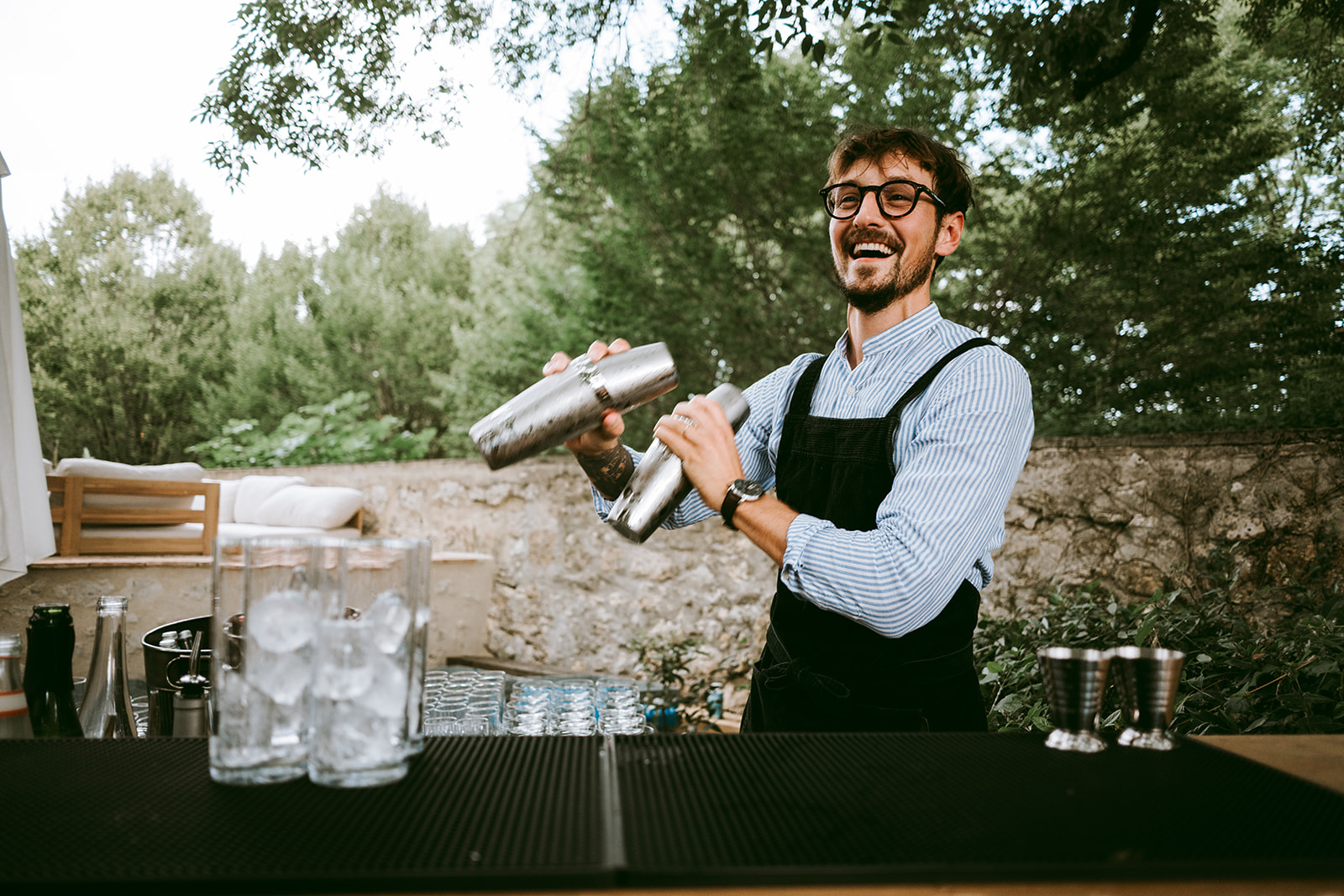
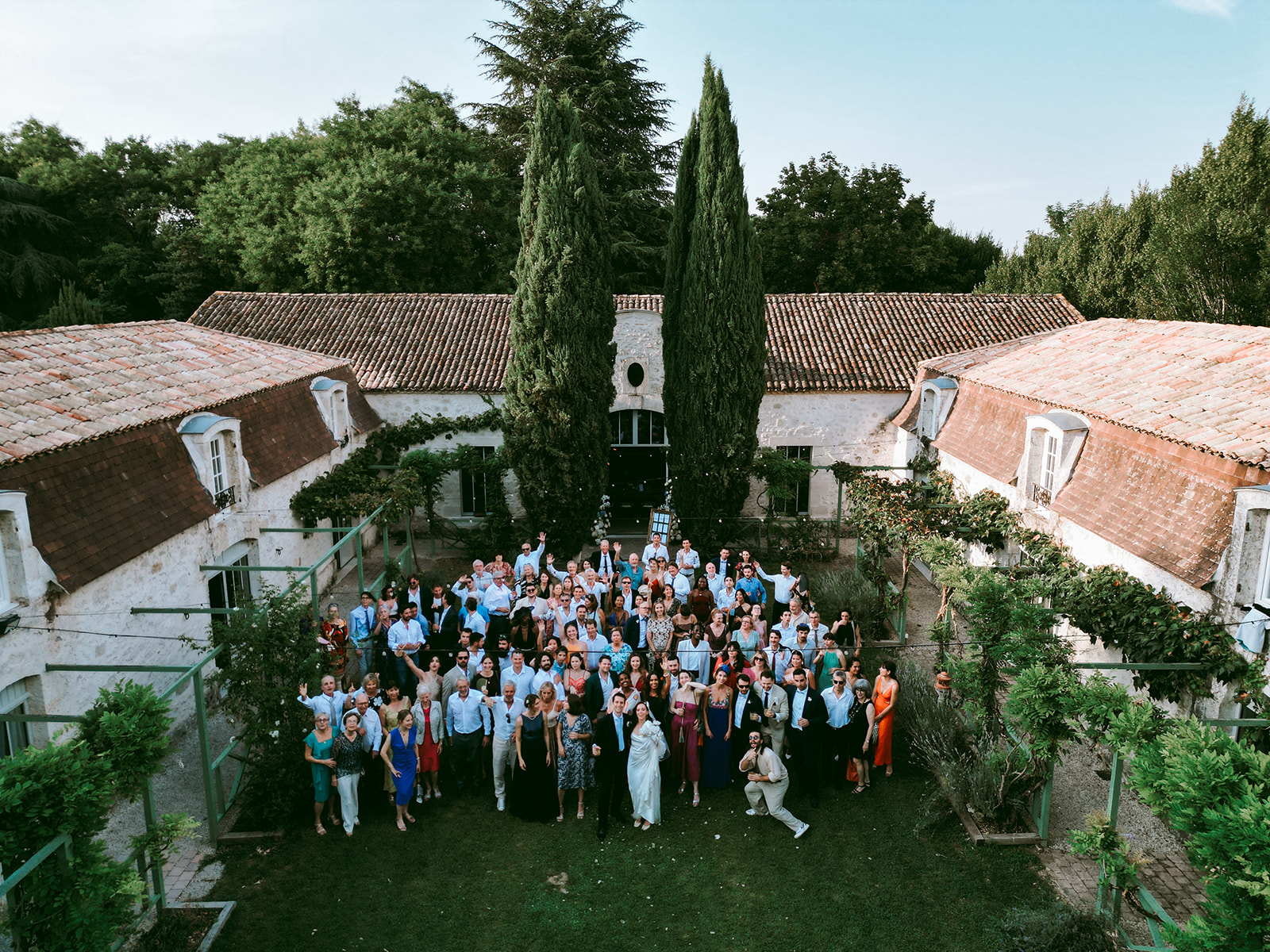
A late brunch by the pool, in the garden or under the trees is often everyone’s favourite moment of the weekend. People are tired and happy, they share stories from the night before, and there’s finally time to talk properly. In France, some families call it the retour.
Ideas for your guests
If your guests stay a few extra days, the South West has plenty to offer, wherever your venue is:
- Wine tastings in the Médoc, Saint-Émilion, Bergerac or Buzet, or Armagnac in the Gers.
- Village markets, with local cheese, fruit, duck and wine. Sarlat’s market, in the Dordogne, is one of the best known.
- A canoe trip on the Dordogne river, below the cliffs and hilltop châteaux.
- Bastide towns and medieval villages, perfect for a slow afternoon.
- Bordeaux itself, for those who want a day in the city.
A simple welcome note in each room, with a map, a few recommendations and the weekend’s timings, makes a big difference for guests who don’t speak French.
If you’re organising all this from abroad, don’t worry. Jorien and Bram planned their wedding in Goudourville from Belgium, and we met online first. I’m used to working with couples, planners and venue teams at a distance, in English.
Keep everything in one place
My other piece of advice: avoid long journeys between the different moments of the day as much as you can. When everything happens in the same place, people are much more relaxed, and nobody loses time going from one place to another. That’s one of the real strengths of a ceremony at the venue compared with a church in town.
I learned it the hard way. For my own wedding, the church was right in the centre of Bordeaux, and the reception was at Domaine de la Dame Blanche, in Gironde, on the border with Lot-et-Garonne. It was very, very far for our guests, and we were a bit anxious all day, wondering how everyone would get home.
Where everyone stays
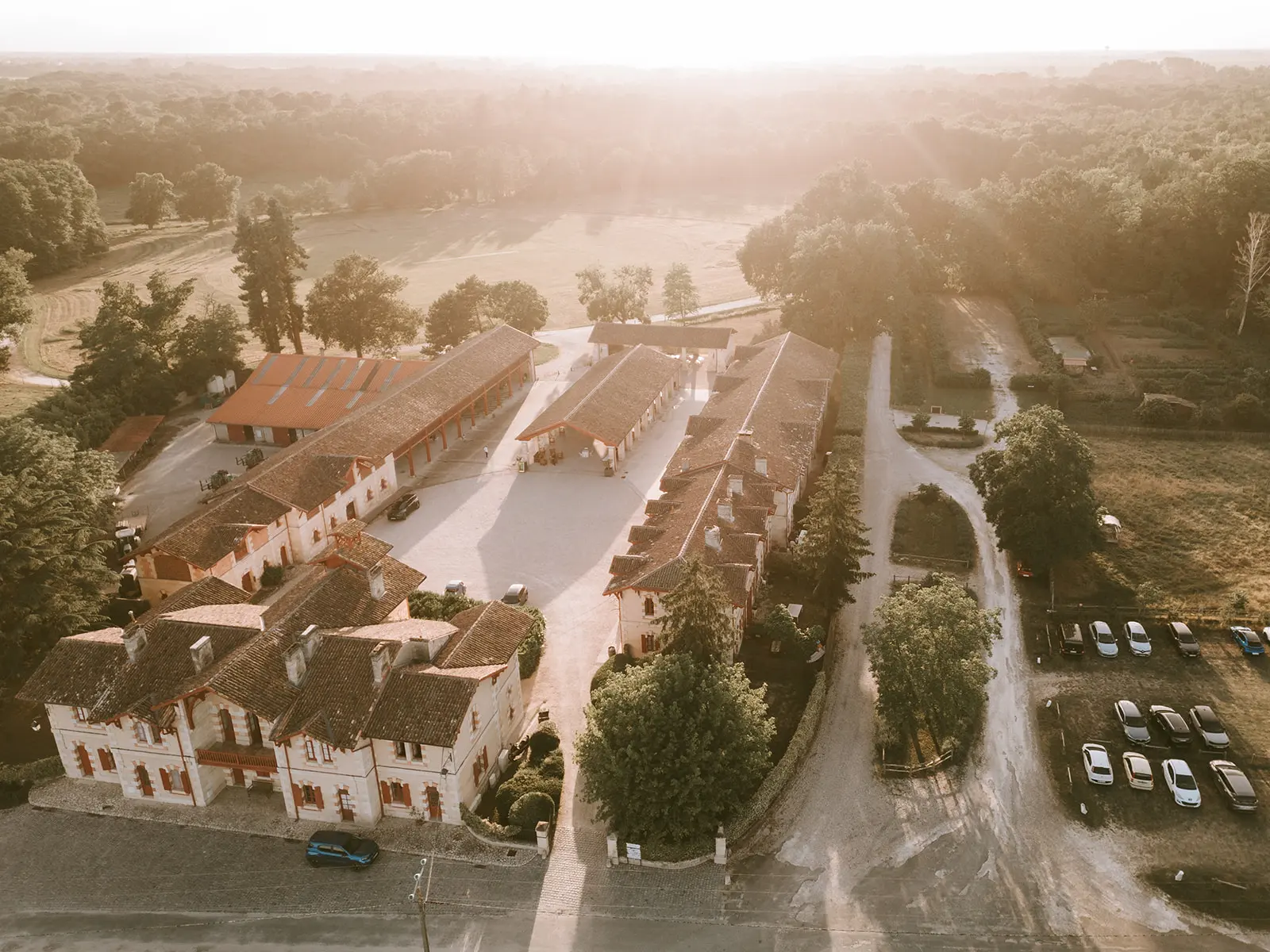
Choosing a venue with rooms on site makes everything easier: no driving after the party, and the feeling of a real house party. Many châteaux and estates in the region can host the couple and close family, sometimes more. For the other guests, look at nearby gîtes, hotels and B&Bs, and plan a shuttle between them and the venue. Ask the venue owners if they have a list of nearby gîtes or partner accommodation: many do, and it makes life much easier for your guests. You’ll find examples in my guides to Dordogne wedding venues, the Médoc and Château Saint-Denis.
Photographing the whole weekend
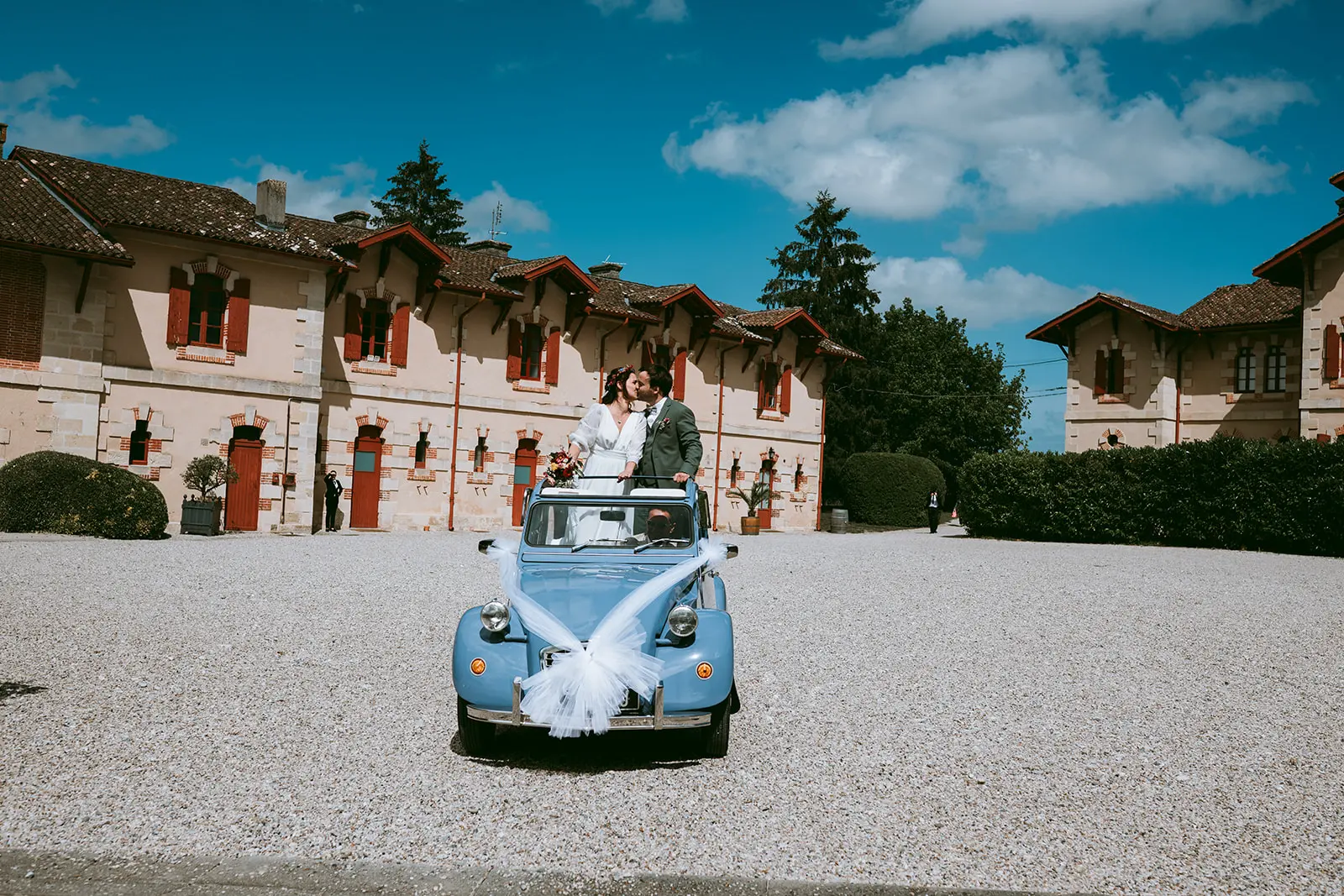
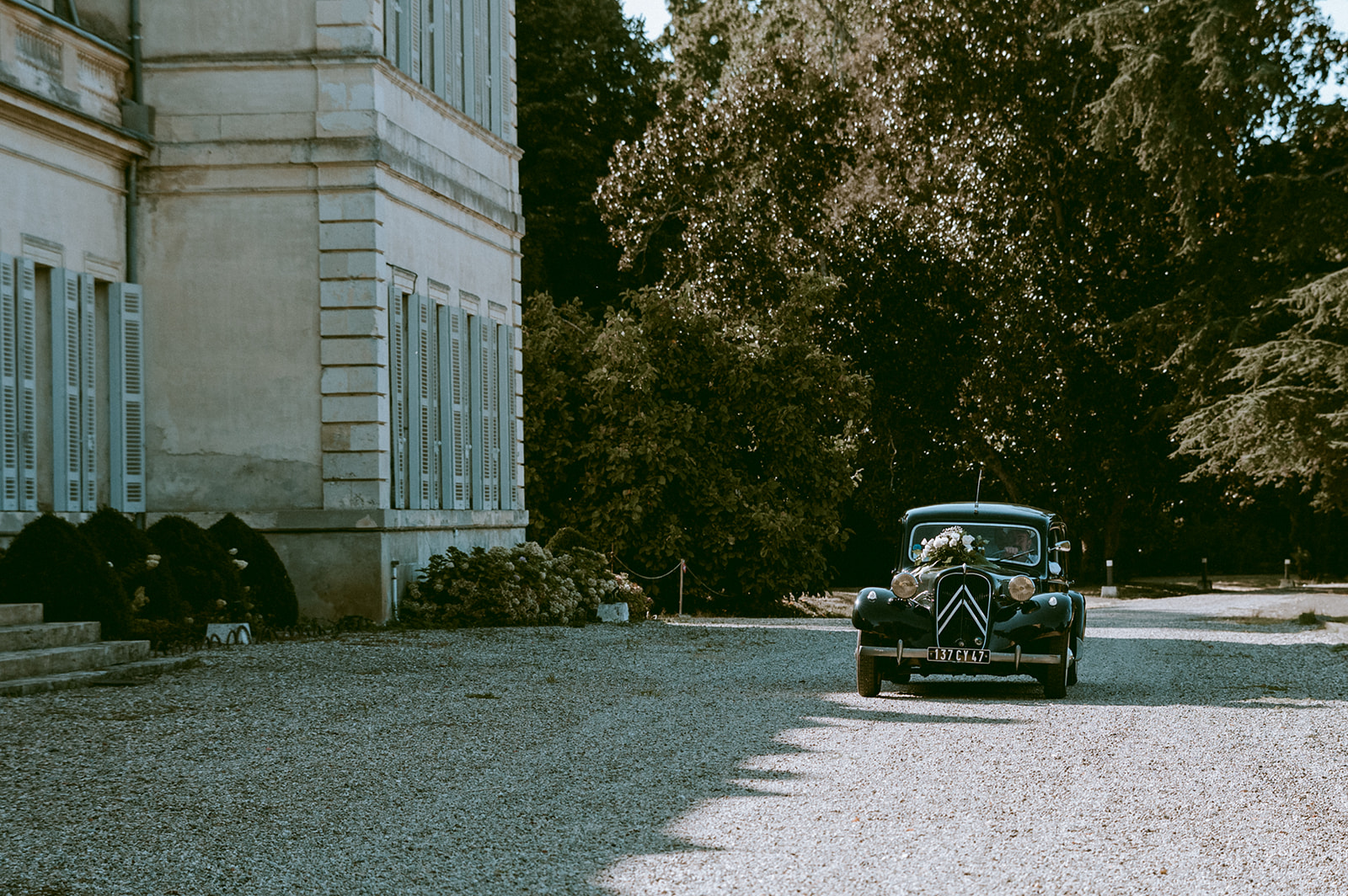
That’s what my Weekend collection is for, and it’s the one couples choose most often: the welcome evening, the wedding day and the brunch, told as one single story. The welcome dinner is often where the most relaxed, spontaneous images happen, and the brunch gives you photos of your guests you’d never get on the wedding day itself.
One English couple summed it up in their Google review better than I could: speaking three languages « was also a big plus for our international crowd », and I stayed « many hours later than planned ». On a weekend like this, that flexibility matters.
All the details are in my brochure. Tell me your dates and your venue on my destination wedding page, and I’ll get back to you quickly.
Cadeau
Recevez ma brochure 2027-2028
Mes quatre formules, ce qu'elles comprennent et comment se passe un reportage. Je vous l'envoie par email. Pas de newsletter : juste un petit mot de ma part quelques jours après, si vous avez des questions.